On this page
Selling internationally is easier than ever. Supporting those customers is still hard. A shop with buyers in eight countries rarely has eight languages on the team — and a customer who can’t ask in their own language often doesn’t ask at all.
Two-way translation in chat changes the maths. Here’s how to use it well.
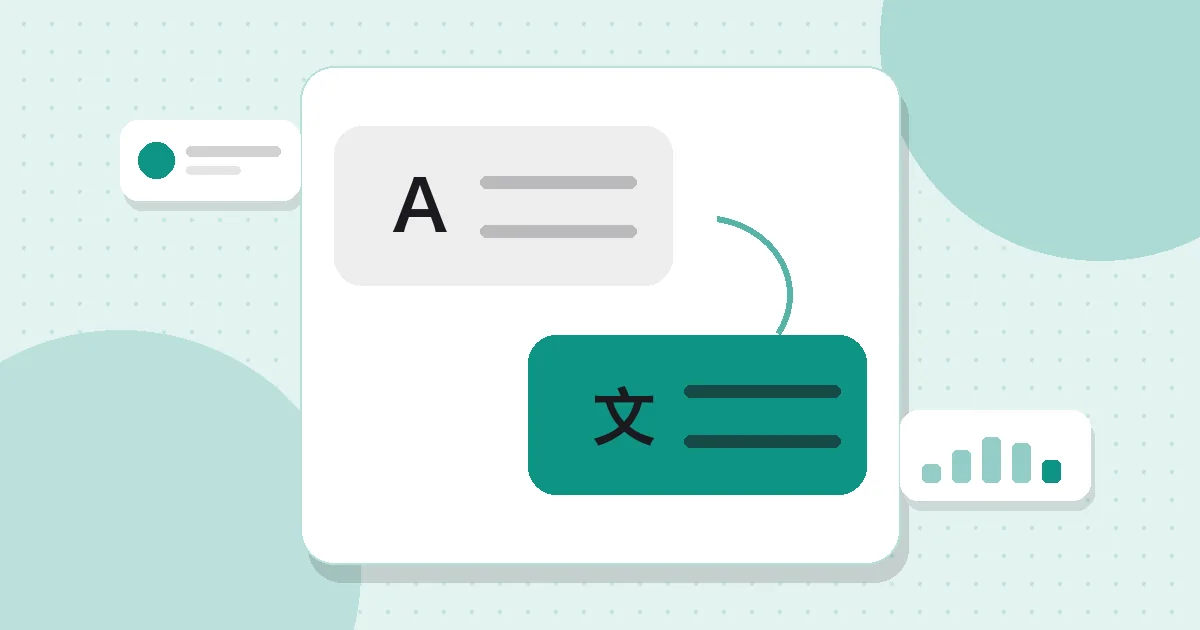
How two-way translation works
The idea is simple:
- The visitor writes in German
- The agent sees original and translation
- The agent replies in their language
- The visitor gets the reply in German
When the visitor and agent share a language, nothing is translated. Internal notes stay internal. In AskCub this works across 18 languages and is included from the Pro plan.
What changes for your team
- One queue for every market. No separate German inbox staffed twice a week.
- Agents stay in their strongest language. They write clearly and quickly, without wrestling with grammar.
- The AI agent joins in. When Cubby answers, it answers in the language the visitor wrote in, from the same knowledge base.
Where translation needs your help
Machine translation is very good at everyday customer service language. It’s less reliable with:
- slang and abbreviations (“asap”, “np”, local idioms),
- long, nested sentences with several conditions,
- ambiguous product terms that mean different things in different markets,
- numbers buried in words (“a couple of weeks”, “mid-next-month”).
So write the way you would for a busy reader: short sentences, one idea each, digits for numbers and dates.
Confirm the details that matter
For prices, addresses, sizes and order numbers, ask the customer to confirm. “Just to confirm: size M, delivered to Berlin, total €58 — correct?” A quick check prevents the expensive misunderstanding.
Greetings and the knowledge base
Greetings and knowledge base answers are shown as you wrote them. Two practical approaches:
- Write greetings in English (or another widely understood language) and let translation handle the conversation.
- Write your most common answers clearly and simply; the AI agent answers in the visitor’s language from them.
When to bring in a native speaker
Translation covers the everyday. Keep a human native speaker — even a freelancer for a few hours a week — for:
- complaints and sensitive situations,
- legal or contractual wording,
- marketing copy and product pages.
A rollout plan for cross-border teams
- Look at visitor countries in your reports to find your top three non-native markets.
- Turn on two-way translation.
- Rewrite your top twenty answers in short, plain sentences.
- Test in a private conversation in each language.
- Review a sample of translated conversations each week for the first month.
The takeaway
You don’t need a polyglot team to make international customers feel at home. You need clear writing, two-way translation and the judgment to bring in a person when the stakes are high.
Related articles
Cross-border & multilingual3 min read
Seven questions overseas shoppers ask before they buy
Shipping, customs, payment, returns, sizing, trust and timing — what cross-border buyers need to hear, and how to answer each one in chat.
Read article
Cross-border & multilingual2 min read
Covering customers across time zones with a small team
Your customers are awake when you’re asleep. A practical way to split the day between people, an AI agent and honest offline messages.
Read article
AI customer service4 min read
When should an AI agent hand a conversation to a person?
Five hand-off triggers that keep customers from getting stuck with a bot — and the three mistakes that make AI support feel worse than no support.
Read articleTry it on your own site
A free plan with no time limit, AI agent included. One line of code.